How to Become a Dental Assistant: The Complete Step-by-Step Guide
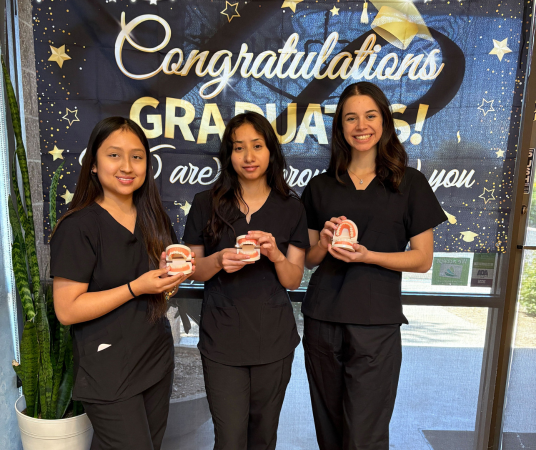
Becoming a dental assistant is one of the fastest, most practical paths into healthcare. The process takes months, not years. The training is hands-on, not theoretical. And the career it leads to is stable, growing, and well-compensated — with a national median salary of $46,540/year and 7% projected job growth through 2033 (BLS).
Here’s the complete step-by-step path to becoming a dental assistant.
Step 1: Understand What the Job Involves
Before investing time and money in training, make sure the work matches what you’re looking for. According to O*NET, dental assistants perform tasks across five categories:
Clinical work (the majority of your day):
- Assisting dentists chairside during procedures — passing instruments, managing suction, retracting tissue
- Taking dental X-rays (periapical, bitewing, panoramic) and evaluating image quality
- Sterilizing instruments and preparing operatories between patients
- Mixing and handling dental materials — impressions, cements, composites, temporaries
- Applying topical anesthetic and providing patient comfort
Patient interaction:
- Greeting and seating patients
- Reviewing medical histories and documenting chief complaints
- Explaining procedures and answering questions
- Managing anxious patients — a skill that’s especially valued in pediatric and general practices
- Delivering post-operative care instructions
Administrative tasks:
- Scheduling appointments and managing patient flow
- Maintaining dental records and charting
- Verifying insurance and processing claims
- Ordering supplies and managing inventory
Technology use:
- Digital radiography systems
- Practice management software (Dentrix, Eaglesoft, Open Dental)
- Electronic health records
- Intraoral cameras and digital impressions
Compliance and safety:
- OSHA infection control standards
- HIPAA patient privacy requirements
- Radiation safety protocols
- State dental practice act regulations
The work is active, varied, and hands-on. If you like working with people, learning technical skills, and being part of a healthcare team, dental assisting is a strong fit.
Step 2: Choose Your Training Path
Three main options exist:
Focused vocational program (10–12 weeks)
Best for: Career changers, working adults, parents, anyone who wants to start earning quickly
- Career-specific curriculum — every hour focuses on dental assisting skills
- Training in real dental offices using real equipment
- Externship placement in a local practice
- RDA certification preparation integrated throughout
- Evening and weekend scheduling
- Cost: $2,000–$5,000 with payment plans, no student loans
Community college certificate (9–12 months)
Best for: Students who prefer a longer timeline and campus environment
- Dental assisting curriculum plus some general education courses
- Campus-based labs (not real dental offices in most cases)
- Externship usually included
- Cost: $5,000–$15,000, student loans sometimes required
Associate degree (18–24 months)
Best for: Students who want an academic credential or plan to transfer into dental hygiene
- Dental assisting plus significant general education requirements
- Longest timeline to employment
- Cost: $10,000–$25,000+, student loans common
All three paths cover the same core clinical competencies tested on the RDA exam. The difference is time spent on non-dental coursework and the associated cost.
Step 3: Complete Your Training
At Dental Assistant School, the 12-week program covers the full scope of dental assisting:
Weeks 1–4: Foundations
- Dental anatomy, terminology, and tooth numbering systems
- Infection control science and OSHA standards
- Instrument identification and classification
- Introduction to chairside assisting
- Basic patient communication
Weeks 5–8: Core Clinical Skills
- Dental radiography — technique, positioning, safety, digital systems
- Dental materials — mixing, handling, and application
- Four-handed dentistry — efficient instrument passing, suction, retraction
- Sterilization procedures — autoclaving, chemical disinfection, monitoring
- Advanced chairside assisting for specific procedures
Weeks 9–12: Advanced Skills and Externship
- Administrative skills — scheduling, charting, insurance, practice management software
- Externship in a local dental office — supervised patient care
- RDA exam preparation and comprehensive review
- Career readiness — resume building, interview preparation
Step 4: Complete Your Externship
The externship is where training becomes real-world capability. You’ll spend time in a dental office, working under supervision with actual patients. This experience:
- Builds confidence that no classroom can replicate
- Exposes you to the daily rhythm of a functioning dental practice
- Creates professional connections — many graduates get hired at their externship site
- Gives you specific, concrete examples to use in job interviews
Step 5: Earn Your Credentials
After completing training, pursue your RDA (Registered Dental Assistant) credential. Requirements vary by state but typically include:
- Completion of an approved training program ✅
- Passing a written knowledge exam
- Passing a clinical skills assessment (in some states)
- CPR/BLS certification ✅ (included in the program)
- Meeting additional state requirements (background check, fingerprinting, etc.)
Your state dental board sets specific requirements. Dental Assistant School prepares you for the exam content across all states.
Why certification matters: RDA-certified dental assistants earn $2,000–$6,000/year more than non-certified peers (BLS, employer surveys). Over a 5-year career, that’s $10,000–$30,000 in additional income — from a credential you prepare for during training.
Step 6: Get Hired
With training complete and certification in progress, you’re ready to enter the job market. O*NET classifies dental assisting as a “Bright Outlook” occupation with strong demand nationwide.
Where dental assistants work:
- General dentistry offices (most common)
- Specialty practices — orthodontics, oral surgery, periodontics, pediatric
- Group and multi-location dental practices
- Community health centers and FQHCs
- Corporate dental chains
What helps you get hired fastest:
- RDA certification (or proof you’ve scheduled the exam)
- Externship experience with specific clinical examples
- A resume highlighting hands-on skills, not just coursework
- Professional references from your training and externship
- Willingness to apply across practice types
The Full Timeline
| Phase | Duration |
|---|---|
| Research and enrollment | 1–2 weeks |
| Training program | 12 weeks |
| RDA exam | 2–4 weeks after graduation |
| Job search and hiring | 2–6 weeks |
| Total: zero to employed | Approximately 4–5 months |