Dental Assistant School Near Me: Training
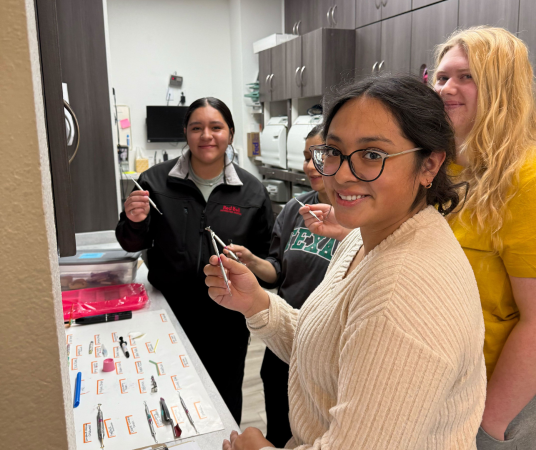
Choosing a dental assistant school is one of the most consequential decisions you’ll make in your career path — and location matters more than most people realize. A school near you means shorter commutes, local externship placements, connections to dental offices in your area, and a schedule that actually fits your life. For people, Dental Assistant School offers exactly that: a 12-week, hands-on dental assistant program designed for your community.
But “near me” should be just the starting point. What matters more is whether the program actually prepares you for the job. Here’s how to evaluate a dental assistant school — and what makes the difference between a program that produces competent, employable graduates and one that doesn’t.
What to Look for in a Dental Assistant School
Hands-on training in real dental offices
This is the single biggest differentiator between programs. Some schools teach dental assisting in traditional classrooms using textbooks, PowerPoints, and plastic models. Others — like Dental Assistant School — hold classes inside working dental practices where you train on real equipment in the actual environment where you’ll work.
The difference shows up on day one of the job. Graduates who trained in real offices know how an operatory flows. They’ve handled actual instruments, operated real X-ray equipment, and practiced sterilization in a clinical setting. Graduates who trained only in classrooms face a steep adjustment period when they encounter the real thing.
Focused, career-specific curriculum
A dental assistant school should teach dental assisting. That sounds obvious, but many community college programs bundle dental assistant training with semesters of general education coursework — English, math, social sciences — that don’t appear on credentialing exams and don’t help you assist chairside.
A focused program covers exactly what dental offices need you to know:
- Chairside assisting and four-handed dentistry
- Dental radiography (X-rays) — technique, positioning, safety, processing
- Sterilization and infection control — autoclaving, chemical disinfection, OSHA protocols
- Dental materials — impressions, cements, composites, temporary restorations
- Patient communication — intake, comfort management, post-op instructions
- Administrative skills — scheduling, dental charting, insurance verification, EHR systems
Every hour of instruction is directly applicable to the job. No filler.
Certification exam preparation
The Registered Dental Assistant (RDA) credential is the most widely recognized certification in the field. Not every state requires it, but employers strongly prefer it — and certified dental assistants earn more.
The best dental assistant schools integrate certification prep throughout the entire program, not just in the final week. That means by the time you graduate, you’ve been preparing for the exam for 12 weeks — not scrambling to cram.
Externship placement
An externship puts you in a real dental office under supervision, applying everything you’ve learned with actual patients. This experience:
- Builds clinical confidence that classroom training alone can’t replicate
- Exposes you to real-world patient interactions and office workflow
- Creates professional connections — many graduates get hired at their externship site
- Gives you concrete interview material when you start applying for jobs
Flexible scheduling
If you’re a working adult — and most dental assistant students are — you need a program that doesn’t require you to quit your job. Evening and weekend class schedules allow you to train for your new career while maintaining your current income.
Transparent, no-loan cost structure
Understanding the full cost before you enroll is essential. Look for programs that offer clear tuition information, payment plan options, and a commitment to keeping students debt-free. Student loans for a short-term training program create an unnecessary financial burden when payment plans are available.
Why Location Matters for Dental Assistant Training
Local externship placement
When your school is, your externship is. That means you’re building connections with local dental offices — the same offices that will be hiring when you graduate. Local externships also mean shorter commutes and easier scheduling.
Community connections
A school that operates in your community understands the local job market. They know which offices are hiring, what pay rates look like in the area, and what specific skills local employers prioritize.
Reduced barriers
A school near you eliminates the long commute that makes evening and weekend classes impractical. When the drive is 15 minutes instead of 45, attending class consistently becomes much easier — and consistency is what gets you through the program.
Dental Assistant Career Outlook
The Bureau of Labor Statistics reports the following for dental assistants:
- Median annual salary: $46,540 (approximately $22.38/hour)
- Projected job growth: 7% through 2033
- Entry-level salary range: $33,000–$40,000
- Experienced salary range: $48,000–$58,000+
Certification, specialty practice experience, and geographic market all influence where you fall within those ranges. But the fundamentals are strong: dental assisting is a growing field with reliable demand and solid compensation for the training required.
How Dental Assistant School Works
Program length: 12 weeks Schedule: Nights and weekends — designed for working adults Training location: Real dental offices, not traditional classrooms Includes: Hands-on clinical training, externship placement, BLS certification, RDA exam preparation Cost: No student loans. Payment plans available to keep you debt-free.
The program covers the complete scope of dental assisting — clinical skills, administrative competency, and professional readiness — in a timeline that respects your time and your budget.
What 12 Weeks Covers
Weeks 1–4: Dental anatomy and terminology, infection control, instrument identification, basic chairside techniques, patient communication Weeks 5–8: Dental radiography, dental materials, four-handed dentistry, sterilization procedures, expanded clinical skills Weeks 9–12: Externship in a local dental office, advanced procedures, administrative training, RDA exam preparation, career readiness
By graduation, you’ve practiced every core skill multiple times in a clinical setting and completed supervised patient care during your externship.
Take the Next Step
If you’re searching for a dental assistant school, start by understanding what the program actually offers — not just where it’s located. The right school gives you hands-on skills, a credential, professional connections, and a debt-free path to a growing career.