Do Dental Assistants Need To Know About Technology And Software?
Modern dentistry looks very different from what it was even a decade ago. From digital X-rays and 3D scanners to electronic patient records, technology has become an essential part of how dental offices operate. For today’s dental assistants, understanding this technology isn’t just helpful — it’s expected.
At Dental Assistant School, instructors emphasize that digital literacy is part of being a professional in the dental field. Dental assistants no longer just hand instruments and manage sterilization; they also navigate computer systems, operate advanced imaging devices, and input patient data accurately.
As the Program Manager at Dental Assistant School explains, “Technology touches every aspect of modern dental care. We make sure our students are comfortable with the digital side of dentistry before they even step into their externship.”
The Role of Technology in Dental Offices
Technology improves precision, efficiency, and communication in dentistry. Dental assistants play a direct role in managing and maintaining these tools. From appointment scheduling to X-rays, almost every task involves a digital element.
Most dental offices use practice management software to organize patient records, billing, and treatment plans. Dental assistants often handle these systems during check-in and treatment preparation. They enter notes, update health histories, and ensure the patient’s information is accurate before the dentist begins care.
Digital imaging is another area where assistants work closely with technology. Instead of developing traditional film, modern assistants use digital radiography systems and intraoral cameras. These tools capture high-quality images instantly, reducing radiation exposure and allowing for quicker diagnoses.
Why Digital Literacy Matters
Knowing how to operate and troubleshoot dental software is about more than efficiency — it’s about patient safety and confidence. Accurate record-keeping prevents mistakes, and timely communication between team members ensures smooth workflows.
Even seemingly small tasks, like updating a treatment note or printing consent forms, rely on technology. A dental assistant who understands these systems keeps the practice running seamlessly.
Many offices also use cloud-based platforms that allow data sharing between specialists or insurance providers. Dental assistants are responsible for managing these exchanges securely and efficiently, maintaining compliance with privacy regulations.
In this environment, digital competence isn’t optional; it’s part of what makes an assistant valuable.
How Dental Assistant School Teaches Technology
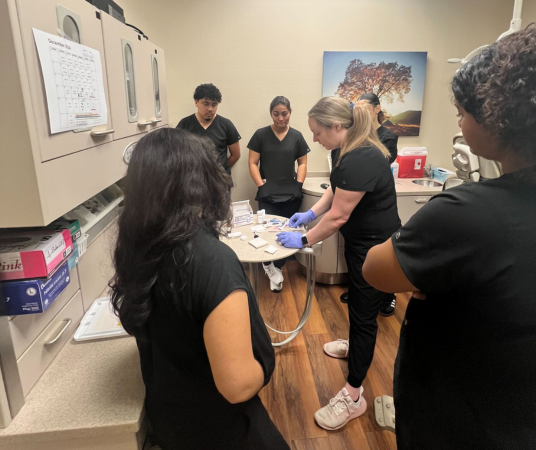
The 12-week program at Dental Assistant School integrates technology training throughout the curriculum. Students learn the theory online through structured modules and then apply it in weekly hands-on labs held in real dental offices.
By training in active clinics, students gain exposure to the exact systems they’ll use after graduation. They see how computers, scanners, and imaging tools fit into the daily routine of patient care.
The program’s approach ensures students leave with confidence using software and handling modern dental tools.
A student from Dental Assistant School described the experience: “At first, I was nervous about all the equipment and digital charts. But after a few weeks, it just clicked. Now I can walk into any office and feel ready.”
Common Systems Dental Assistants Use
While specific software varies by office, most dental practices rely on similar systems for organization and efficiency. Some examples include:
-
Practice management software: Programs like Dentrix or Eaglesoft for patient scheduling, billing, and charting.
-
Digital X-ray systems: Used to capture and store radiographic images quickly.
-
Intraoral cameras: For detailed photos of teeth and gums during exams.
-
Sterilization monitors: To track cleaning cycles and ensure patient safety.
-
Inventory management tools: To maintain supplies and materials efficiently.
Dental assistants are often responsible for setting up, maintaining, and documenting data from these systems — a role that combines clinical and administrative skills.
How Technology Enhances Patient Care
Technology doesn’t just make things faster; it improves the patient experience. With digital imaging, patients can see what the dentist sees in real time. With charting software, treatment plans can be discussed more clearly.
Dental assistants act as the bridge between patients and technology. They help explain procedures, answer questions, and show images that make dental care less intimidating.
The Program Manager adds, “Technology makes dentistry more transparent for patients. Dental assistants play a huge part in helping people understand what’s happening and why.”
Balancing Technical and Interpersonal Skills
While digital skills are essential, technology doesn’t replace empathy or communication. Great dental assistants know how to use both — software for precision, and people skills for connection.
A well-trained assistant understands when to focus on the screen and when to focus on the patient. At Dental Assistant School, instructors emphasize this balance, teaching students to manage data accurately while maintaining a warm, human touch.
Adapting to Change
Dental technology evolves quickly, and assistants must be adaptable. New software updates, tools, and techniques appear every year. The best assistants stay curious and open to learning.
Dental Assistant School prepares students for this reality by focusing on fundamentals — not just which buttons to press, but why technology matters in each context. That mindset allows graduates to adjust easily as tools change.
The Program Manager sums it up: “We teach our students how to learn. Once they understand how systems work, they can adapt to any new one that comes along.”
How Technology Shapes Career Growth
Being comfortable with technology opens doors to career advancement. Dental assistants who master software and digital systems often move into leadership roles like office management, treatment coordination, or technology training.
These positions require both clinical experience and technical confidence — a combination that starts with solid education.
For new graduates, digital proficiency can also be a deciding factor when applying for jobs. Offices appreciate candidates who need minimal training on software, making them more competitive in the job market.
The Future of Digital Dentistry
As dentistry continues to modernize, technology will only become more central. Digital impressions, 3D-printed crowns, and virtual consultations are already transforming how dental teams work.
Dental assistants remain key players in this transformation. They ensure technology enhances care without disrupting the patient experience.
A recent graduate from Dental Assistant School shared, “Once I understood how the software worked, I realized how much smoother everything ran. Patients feel more confident when the process looks effortless.”
Preparing for a Connected Career
Dental assistants of the future will be both caregivers and digital professionals. The industry values those who can move comfortably between patient care and computer systems, combining compassion with precision.
Dental Assistant School’s hybrid approach ensures graduates are ready for both. Students leave not just with skills for today’s tools, but with the adaptability to handle tomorrow’s innovations.
Technology may change the tools, but it doesn’t change the mission. Dental assisting remains a people-first profession — and technology is what helps it shine even brighter.